
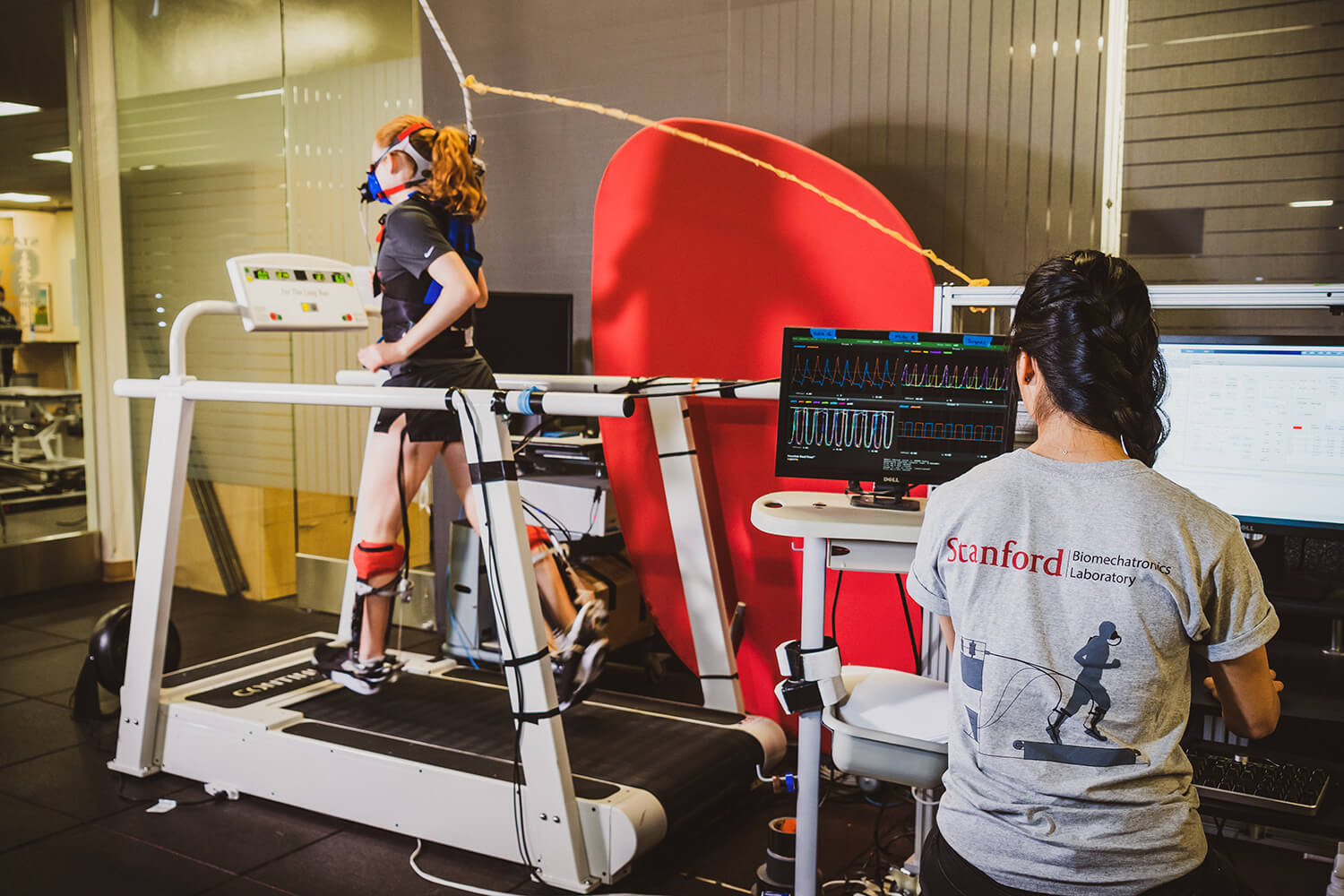
Functional prosthetics date back further than you might think. Today, Stanford researchers are building on this legacy with wearable robotics that rapidly adapt to each user.
The oldest prosthetics that we know of are the “Greville Chester toe” and the “Cairo toe,” both from ancient Egypt. The Greville Chester toe was likely a purely cosmetic appendage, but the Cairo toe may have been an assistive device because it bends and was fitted to the wearer.
Thousands of years later, customization remains a significant feature of prosthetic design. When it comes to something as essential as prosthetics, ensuring they meet an individual’s specific needs is a crucial priority but also a complex, costly challenge, explained Steven Collins, associate professor of mechanical engineering.
That’s why his lab, the Biomechatronics Laboratory, uses special hardware, called emulators, to quickly and affordably test wearable robotics, including prosthetics and exoskeletons for aiding and enhancing movement. These are called emulators because they are capable of emulating different versions of a prosthetic to discover optimal blueprints for portable assistive devices that can exist outside the lab. This avoids the need to build a new robot for every human tester, or every time a researcher wants to test a new idea for how to tweak an assistive device.
One of the projects the team is excited about currently is developing exoskeletons aimed at reducing joint pain for people with osteoarthritis. “Joint pain is one of the biggest concerns for older adults and many of them hope that exoskeletons could help relieve that pain. We are trying to make devices that could address this burning need,” Collins said.
Stanford Report News