
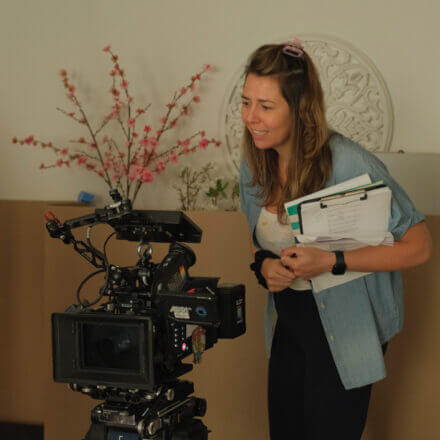
How Hollywood producer Samantha Nisenboim uses AI to empower storytelling while staying rooted in human creativity.
KEY TAKEAWAYS
- Samantha Nisenboim transitioned from a Warner Bros. executive role to a hands-on creative filmmaker.
- She advocates for AI’s role in enhancing, not replacing, human storytelling.
- AI helps democratize filmmaking while reducing production barriers like cost and time.
- Strong partnerships with technology leaders like Dell enable filmmakers to focus on creativity.
What happens when the legacy of Hollywood meets cutting-edge AI technology? Samantha Nisenboim, a seasoned Hollywood producer, is answering that question by pushing boundaries in storytelling. From her days as a Warner Bros. studio executive to becoming a creative producer and advocate for AI integration, Samantha is redefining the filmmaking process.
I sat down with Samantha for a candid conversation about her journey. What followed was a raw, insightful and often emotional dialogue about the future of storytelling, the soul of cinema and the power of human connection in an increasingly automated world.
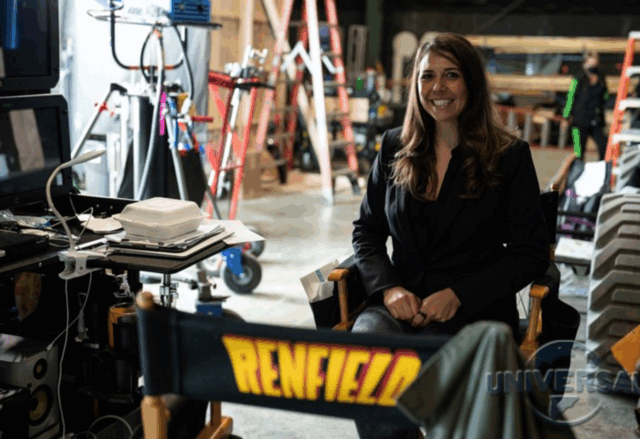
From Studio Executive to Creative Producer
Samantha’s career began with a dream: to become a filmmaker. That dream took her from film school to the heart of Hollywood, where she worked her way up through assistant roles, eventually landing at Warner Bros. There, she found herself in rooms with industry giants—Tom Cruise among them—learning what it takes to shape a blockbuster.
But something was missing.
“I loved being in the fire,” she said. “As a studio exec, you’re a step removed. I wanted to be on the ground, solving problems, making the movie in real time.”
That desire led her to pivot into producing, where she could be hands-on, creative, and deeply involved in the storytelling process. Her partnership with director Chris McKay (The LEGO Batman Movie, The Tomorrow War, Renfield) became a defining chapter, producing five films together and building a company from scratch.
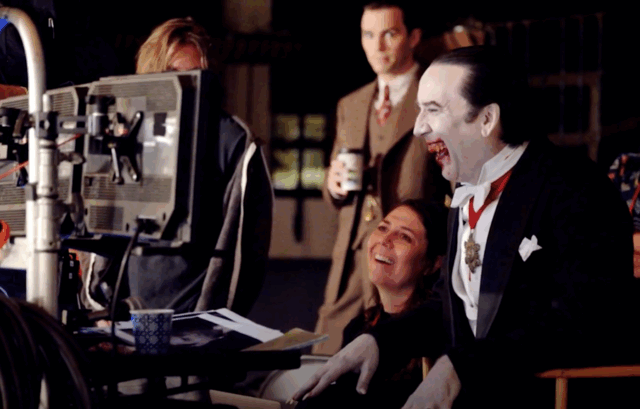
“I didn’t inherit a path—I built one,” she says. “I pitched Chris on starting a company together in what was supposed to be an assistant interview. I figured why not try to create the job I wanted.”
Her time at Warner Bros., particularly during the making of Edge of Tomorrow, gave her a peek into high-stakes creative decision-making. But the executive world felt just one degree too removed.
“I wanted to be the one solving problems with the sun going down,” she adds. “Not reading about them in a call sheet.”
The AI awakening
Then came 2023. The industry strikes gave Samantha a rare pause, a moment to reflect, reset and reimagine her path.
Initially, she found herself buying into the fear surrounding AI. “It only takes a few doomsday headlines, a coffee buzz, and no work on the horizon to start pointing fingers,” she laughs. “And AI was the perfect villain.”
But the more she explored it, the more potential she saw—not just for speed, but for access.
“AI didn’t just speed things up—it made parts of the process that used to be out of reach accessible. It’s not revolutionary, but it’s useful. And now I can do things myself that I used to have to wait on.”
Her curiosity led her down a rabbit hole of tools for planning, ideating and optimizing. She wasn’t interested in replacing artists—she wanted to empower them.
“I’m not trying to make AI films,” she clarified. “I’m trying to make better films faster, with fewer compromises.”
I asked Samantha what she made of the widespread fear that AI would lead to a flood of derivative, soulless content.
She didn’t hesitate.
“If we’re scared that AI will churn out derivative, non-original content, maybe it’s time to ask why we’ve built an entire system that does exactly that,” she said. “For years, we’ve prioritized familiarity and remakes over originality—repackaging what’s worked instead of supporting new ideas. AI isn’t the end of creativity. Our refusal to take creative risks is.”
The human behind the machine
Despite her enthusiasm for AI, Samantha is fiercely protective of the human element in filmmaking.
“There’s this crazy narrative that AI can exist without humans. That’s just not true,” she said. “The idea that AI can replace humans is wrong and frankly, dangerous. Creativity isn’t just inputs and outputs. It’s chemistry, conflict, chaos. That doesn’t come from code. AI is a tool—not a replacement.”
She likens the shift to the move from analog to digital cameras. “It’s about reducing risk. You can take more creative chances because the cost of failure is lower. You still need a vision. But now you’ve got more room to explore it.”

The future of storytelling
Samantha is particularly excited about the potential of AI to democratize world-building and visual storytelling.
“We’re getting closer—just recently, there’s new tech out there that is keeping volumetric lighting consistent as characters move through the frame. It’s impressive,” she said. “But the story still has to be there. That’s what’s missing in a lot of AI content right now.”
She’s also wary of the push toward hyper-personalized content.
“I don’t want a world where everyone has their own personalized content stream. We’re already so disconnected. Storytelling is about shared experience. That’s what makes it powerful.”
A call to creatives
When asked how filmmakers should approach AI, Samantha’s answer is simple: start with the story.
“Let the filmmaker lead as opposed to the technology. Sit down with a director and ask, ‘What do you want to make?’ Then figure out how to use AI amongst your other filmmaking resources.”
She’s also exploring how AI can transform physical production; a space she believes is ripe for innovation.
“There’s so much potential there, and not enough people are looking at it. That’s my next frontier. I’ve spent years watching brilliant ideas die on set because we ran out of time, money, or daylight. If AI can give us back one of those things—even just one—it’s worth exploring.”
Building the bridge
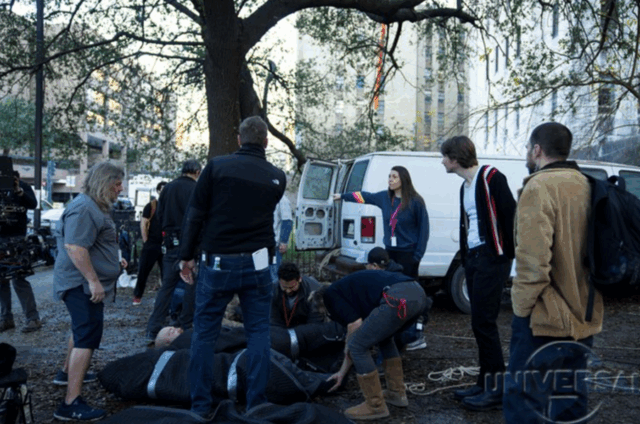
Samantha sees herself as a bridge between two worlds: the legacy of Hollywood and the promise of AI. She’s forming a collective of like-minded creatives and technologists to explore this intersection together.
“It won’t be the studios or the tech companies that lead this,” she said. “It’ll be the filmmakers—one by one—who embrace the tools and reshape the industry.”
Technology partners matter
In a landscape where creative ambition often outruns technical capacity, the difference between success and setback can come down to the strength of your tech partner. As filmmakers experiment with new production models, faster iteration cycles, and AI-enhanced workflows, having the right infrastructure – and the right people behind it – has never been more crucial. Samantha believes that the tools are only as powerful as the team that stands behind them.
For her, a true technology partner doesn’t just provide gear—they embed themselves in the creative process, speak the language of storytellers, and help carry the weight of production. As she puts it: “Much like I’m asking the people building new tech to meet filmmakers where we are, I’ve been having the same conversation with my colleagues at Dell. Having a tech partner who actually understands both the creative and technical sides of what we do is rare. From the Dell Pro Max laptop I rely on to the PowerScale storage supporting our editorial pipeline—every piece of infrastructure matters.
But Dell gets it. They’re not just selling hardware—they’re showing up. They understand the pressure we’re under and the stakes of getting it right. That’s why this relationship has lasted. Take a look at us for example – we’re 11 years in and still evolving together.”
Final thoughts
As we wrapped up, Samantha left me with a thought that perfectly captures her ethos:
“Sometimes the answer isn’t another prompt. Sometimes the answer is… sleep on it. Time and patience are gifts. Just because we can make something, doesn’t mean we should.”
In a world racing toward the future of content creation, Samantha Nisenboim is a reminder that the heart of storytelling still beats in the human experience—and that the best stories are yet to be told.
Dell Technologies Blog. A. T.